 Least rain
Guides
Language
EnglishCurrency
US dollar · $GetYourGuide uses the currency you choose.
Guide · Best time
Cebu whale shark season: when to go to Oslob
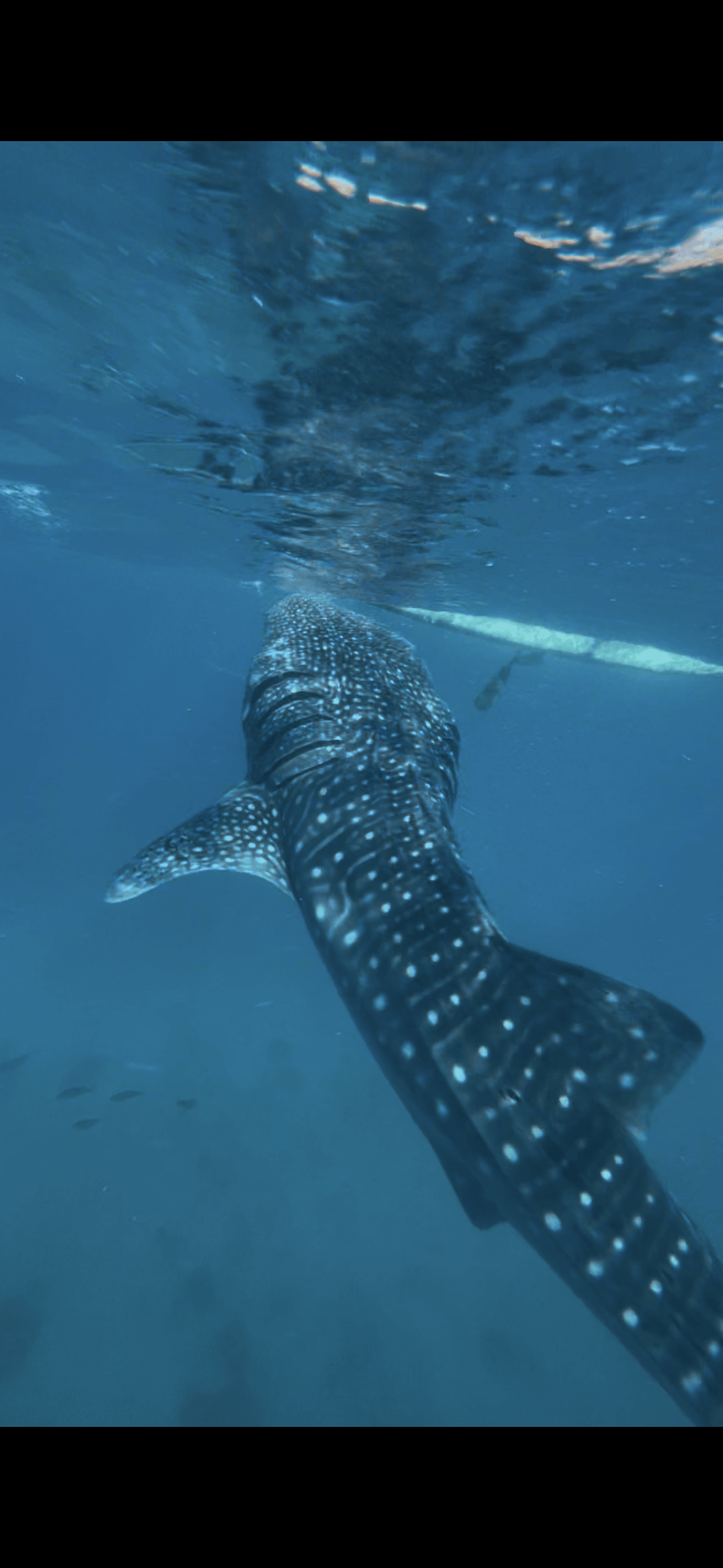
The Cebu whale shark season at Oslob never really closes, since the sharks are fed every morning. What changes is how many come, how wet the month is and how long you queue.
Check availabilityfrom $127 · free cancellation possible
Editorial team, oslobwhalesharkwatching.comUpdated October 22, 2026Reading time 6 min13 sources
Whale sharks every day of the year
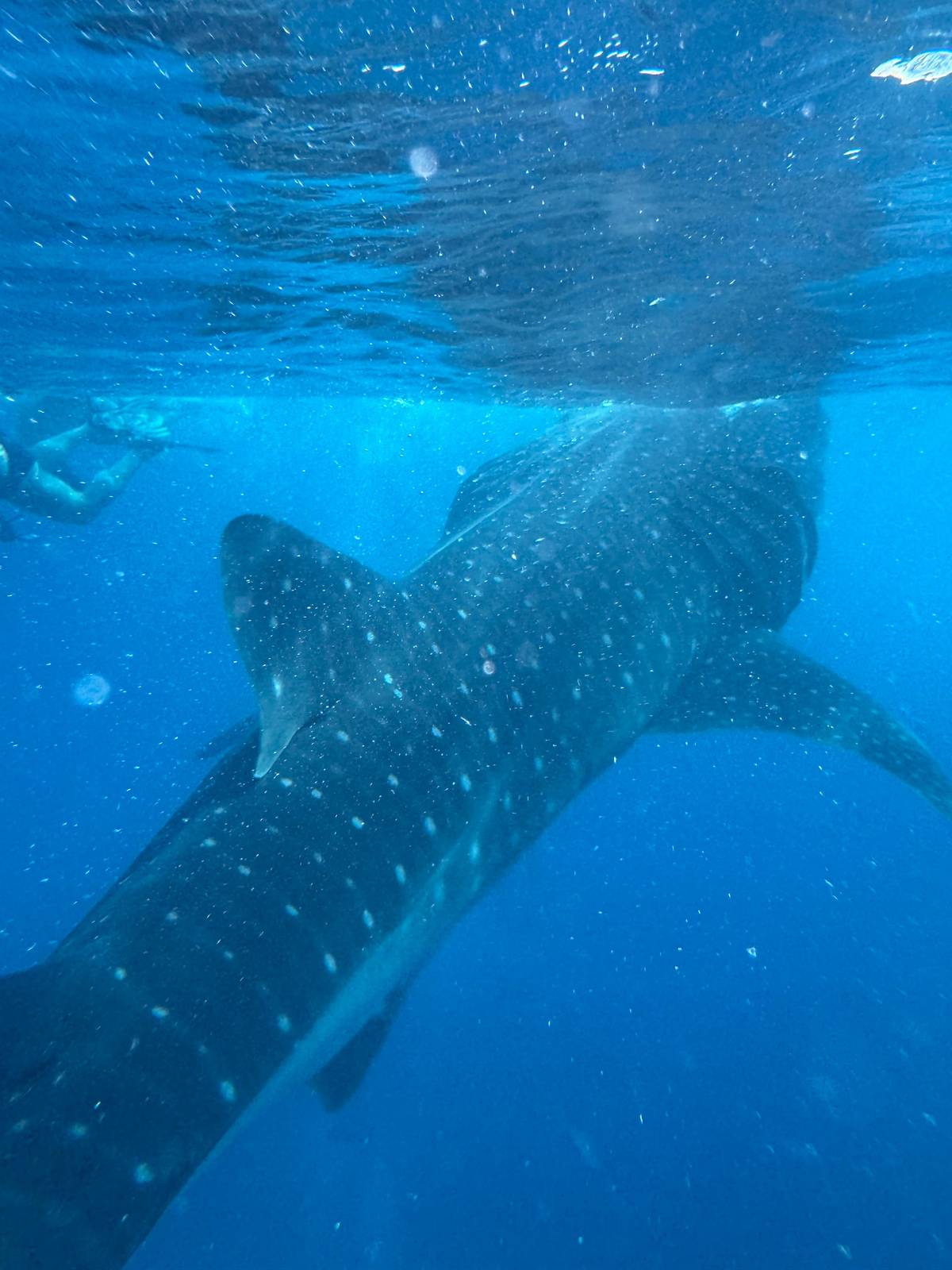
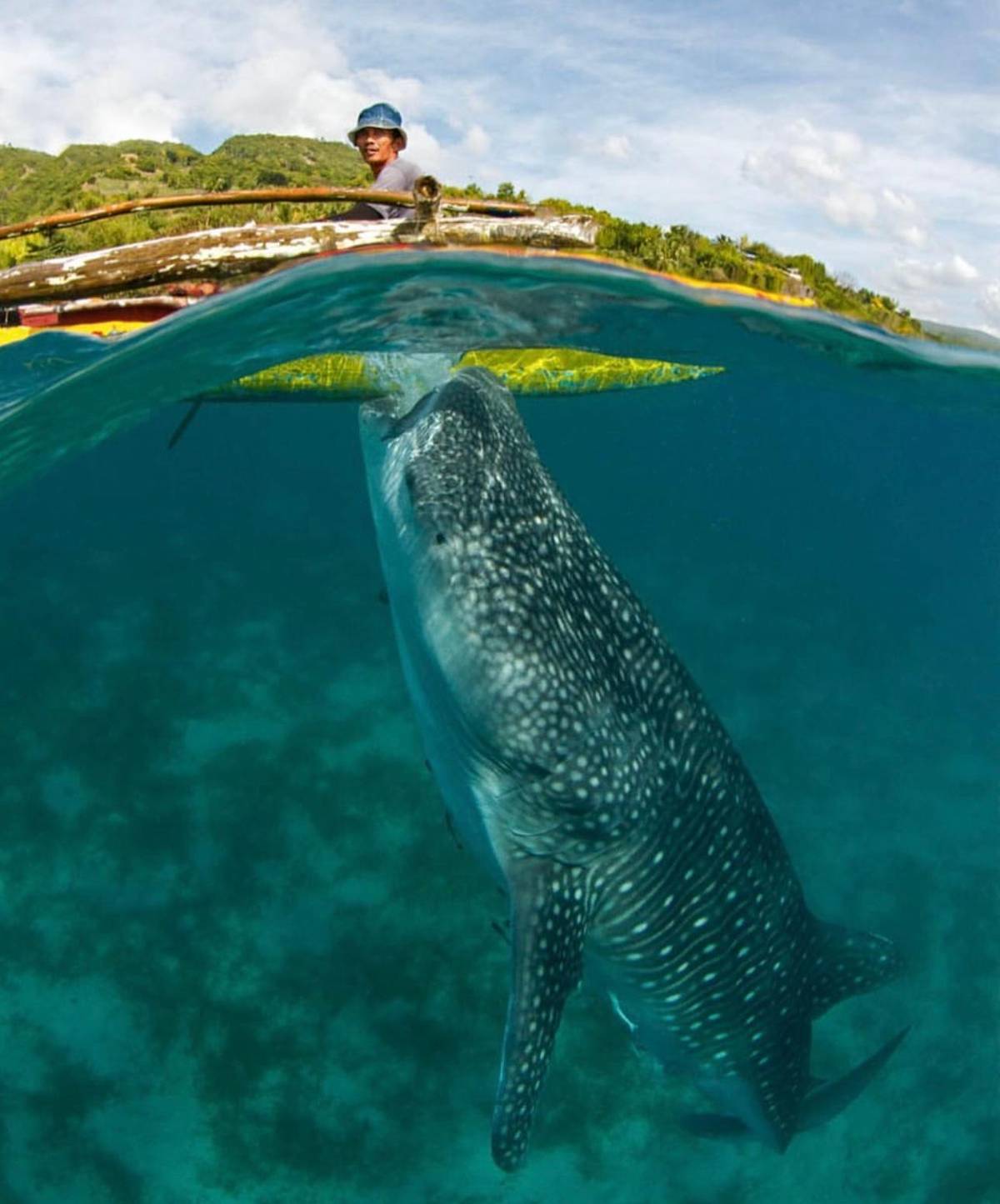
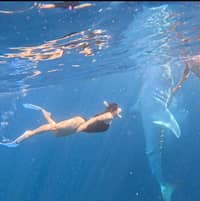
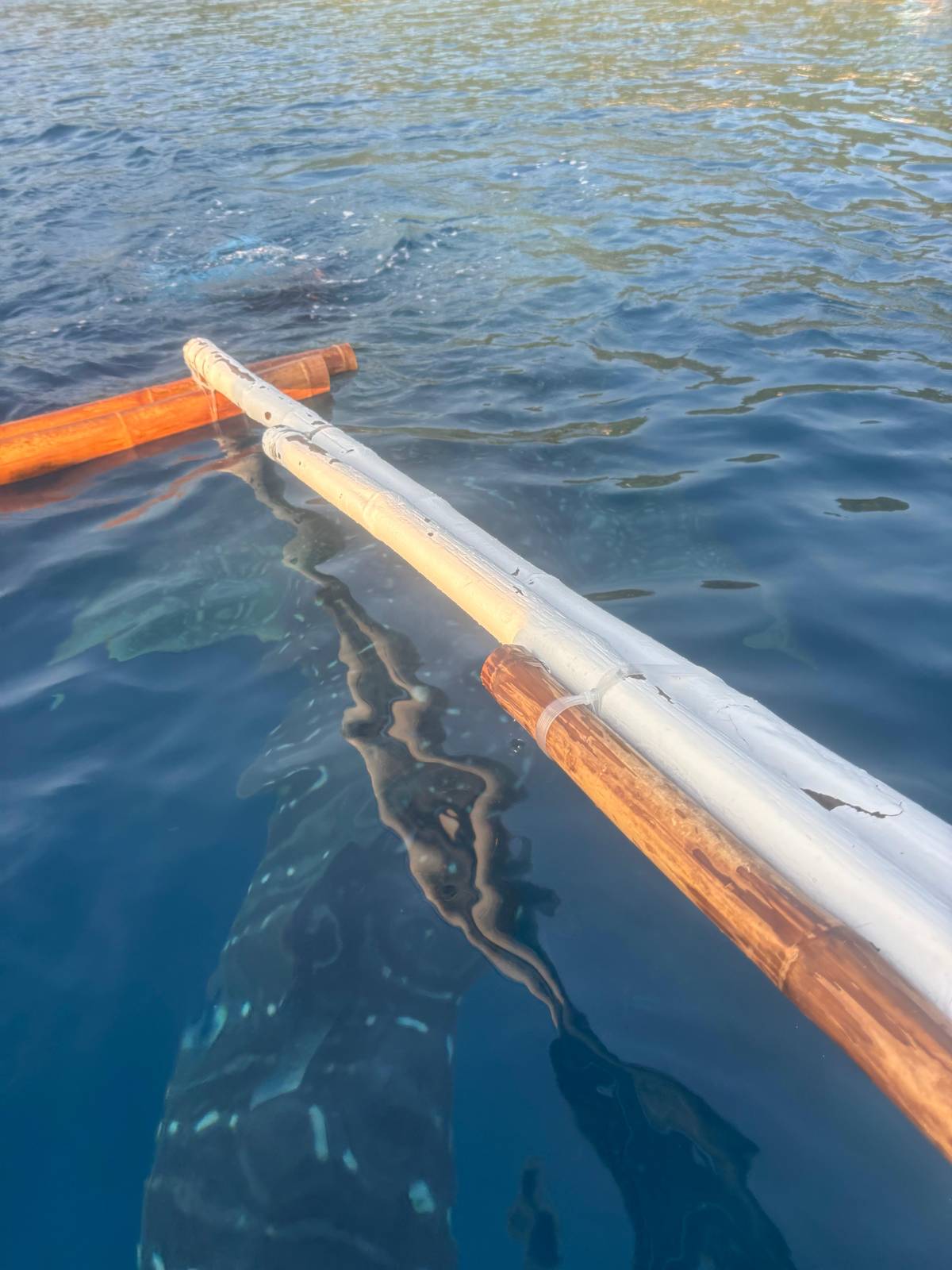
Unlike the seasonal whale shark sites of the Philippines, Oslob has sharks all year. They are provisioned daily, year-round.1 Before the feeding began in 2011, whale sharks were seen only sporadically off Oslob.5 Today you can plan a trip for almost any week and expect to see them.
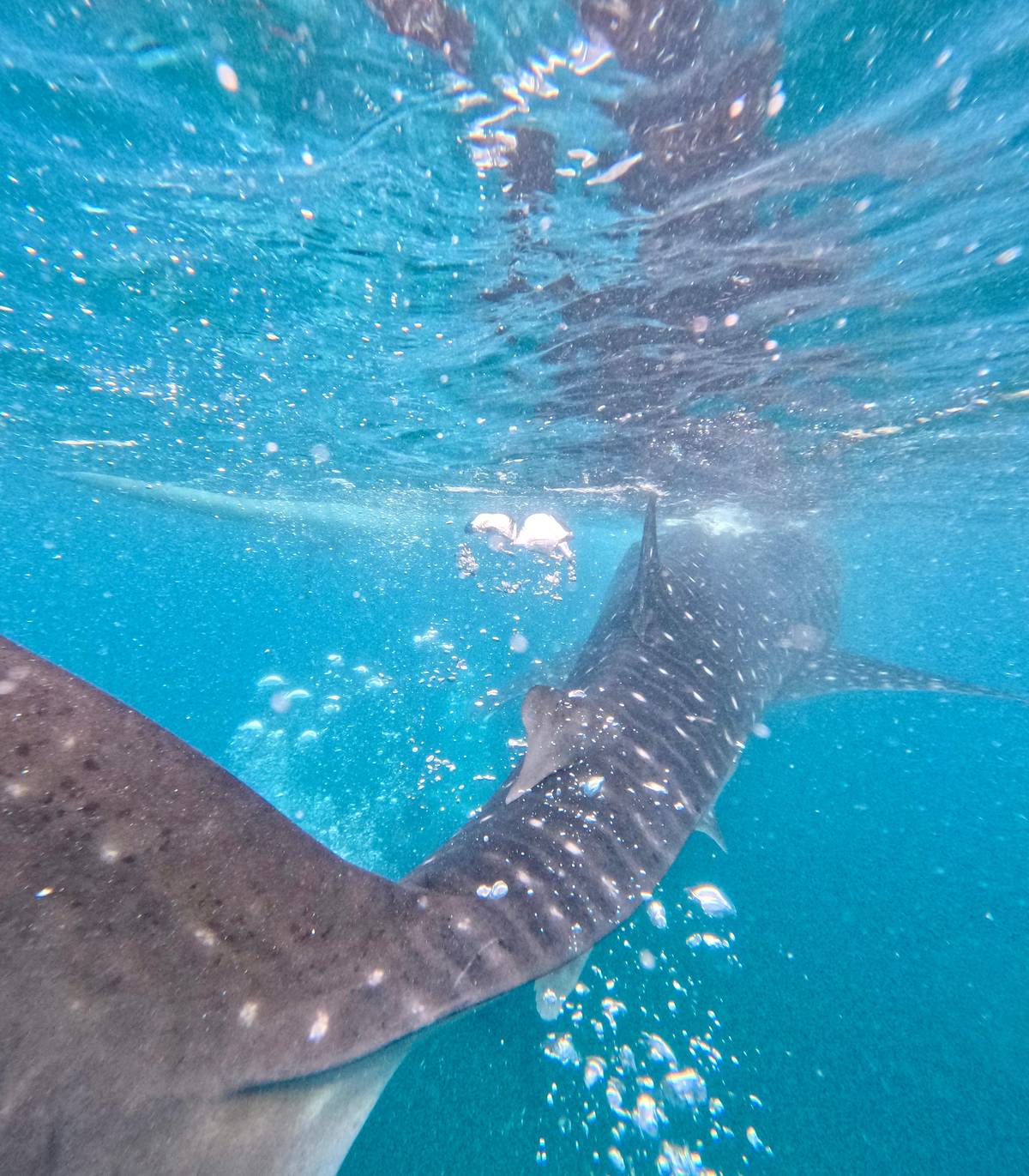
The number of sharks does vary. Over a three-year study, an average of 18.6 individual sharks were seen per week, but the weekly count ranged from 6 to 43.6 Seasonal peaks generally fell between May and November each year.2 If you want the best chance of several sharks around your boat, those months are the strongest.
No study can tell you the count for your visit, but the numbers show that the Cebu whale shark season is less about whether the sharks are there and more about how many share the water with you.
A whale shark morning
The best hours at Tan-awan
-
2:00 to 3:00 AM
Tour pickup
On the booked tour, to reach the queue early.
-
6 am
Water opens
Watchers may enter the interaction area.4
-
Minutes later
Sharks arrive
Experienced sharks follow the feeder boats.7
-
Mid-morning
Peak crowds
Waits average 2 to 3 hours in peak season.
-
1 pm
Water closes
No watchers allowed after that.4
Month by month: heat and rain
Southern Cebu is hot all year. The nearest NOAA weather station, Tagbilaran across the strait on Bohol, has January as its coolest month for daytime highs, at 30.8 °C, and May as its hottest, at 33.2 °C.3 Nights stay mild, with average lows between 23.2 °C in January and 24.7 °C in July.3
Rain is what changes. April is the driest month in that record, with 56 mm and 3 days of at least 2.5 mm.3 The wettest stretch runs from October to December: 154 mm in October, 146 mm in November and 175 mm in December.3 Wet weather can make the sea choppier and the road south slower.
Daylight barely changes so close to the equator. The sun is above the horizon for 11.6 hours at mid-December and 12.7 hours at mid-June.3 With pickups in the middle of the night, you will start in the dark whatever the month. Plan your rest days around that early start rather than around the weather.
Month by month
Night hours and rain days across the year
Hours without sunDays with precipitationSeason
Climate
Daylight, heat and rain near Oslob
| Month | Daylight (h) | Darkness (h) | High / low | Wet days | Whale shark peak |
|---|---|---|---|---|---|
| Jan | 11.6 | 12.4 | 31 / 23 °C | 6 | |
| Feb | 11.8 | 12.2 | 31 / 23 °C | 6 | |
| Mar | 12.1 | 11.9 | 32 / 23 °C | 6 | |
| Apr | 12.3 | 11.7 | 33 / 24 °C | 3 | |
| May | 12.5 | 11.5 | 33 / 25 °C | 6 | peak |
| Jun | 12.7 | 11.3 | 33 / 25 °C | 8 | peak |
| Jul | 12.6 | 11.4 | 32 / 25 °C | 9 | peak |
| Aug | 12.4 | 11.6 | 33 / 25 °C | 6 | peak |
| Sep | 12.2 | 11.8 | 32 / 24 °C | 7 | peak |
| Oct | 11.9 | 12.1 | 32 / 24 °C | 10 | peak |
| Nov | 11.7 | 12.3 | 32 / 24 °C | 11 | peak |
| Dec | 11.6 | 12.4 | 32 / 24 °C | 9 |
Tagbilaran, across the Bohol Strait from Oslob: sunlit hours in mid-month, typical daytime high, typical night low, and rainy days (2.5 mm or more), NOAA April 1971 to 2020, other months 1991 to 2020.3 Season according to Thomson et al., Royal Society Open Science (2017).2
Three ways to time it
Pick your season
Least rain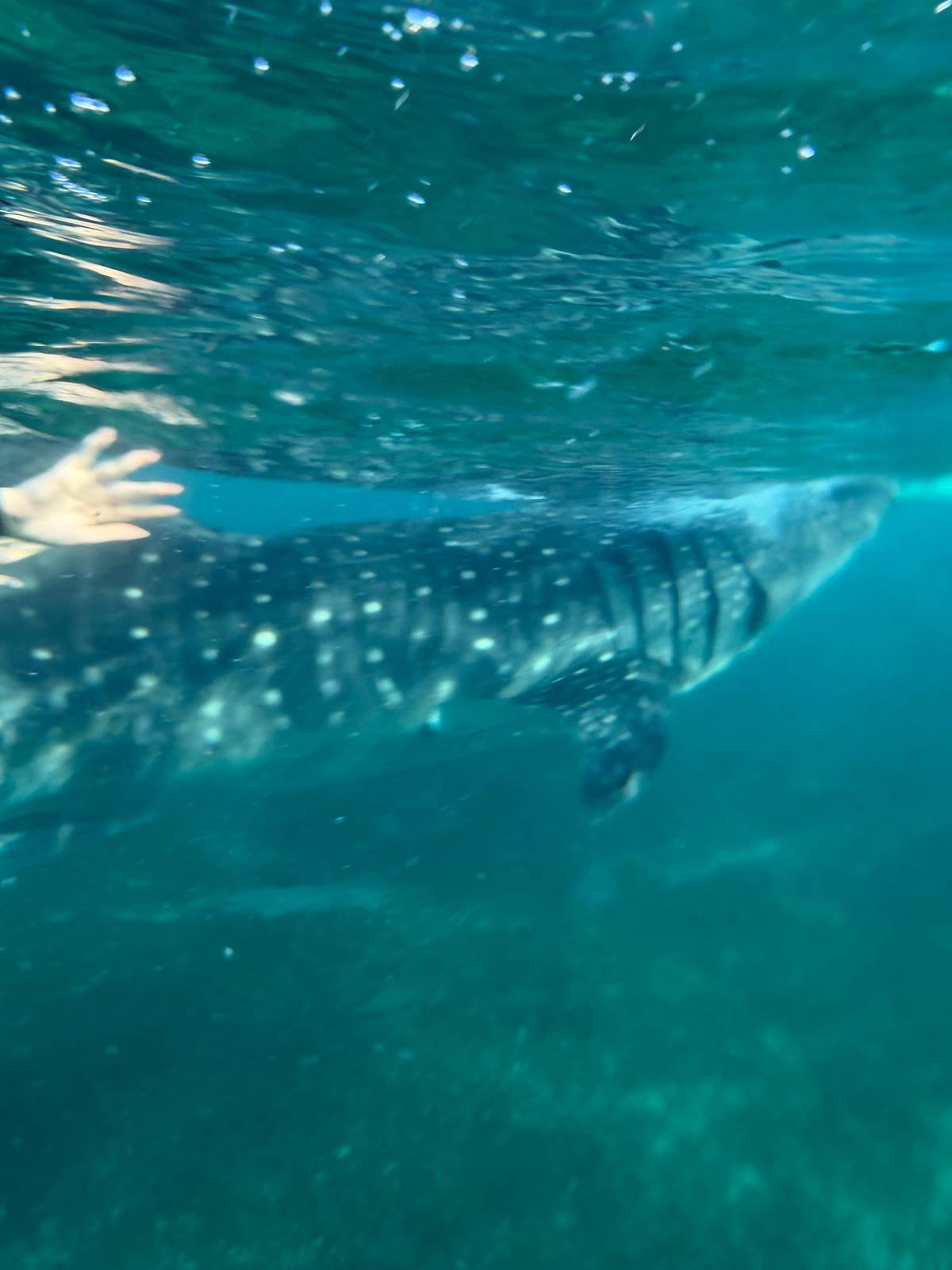 Most sharks
 Wettest
Wet end of year
December and January
- Rain
- 82 to 175 mm
- Highs
- 30.8 to 31.5 °C
- Sharks
- Present all year
The best months for a whale shark trip
For the most sharks, aim for May to November.2 Within that window, May is still fairly dry, with 91 mm and 6 rain days, and August has 101 mm and 6 rain days.3 June and July bring more rain, with 131 mm and 150 mm.3
For the driest weather, aim for February to April. Those months see 84 mm, 90 mm and 56 mm of rain, and no more than 6 rain days each.3 You may share the water with fewer sharks than in the peak months, but drier days make the canyon, the falls and the long drive more pleasant.
If your trip combines the sharks with Kawasan canyoneering or Sumilon Island, weigh the whole day. Rivers and waterfalls run stronger after rain, the sandbar depends on the tide, and a dry month makes the long drive back easier. A shoulder month such as May or August balances the two.
Checklist
Timing your whale shark day
01
Choose
- A weekday early in your stay
- The earliest pickup offered
- A dry month if you add the canyon
02
Bring
- Hat and water for the queue
- A rain jacket from June on
- Something to read while you wait
Video
What Swimming with Whale Sharks in the Philippines is Really Like
Nothing loads from YouTube until you press play.
What time is whale shark watching in Oslob?
The water at Tan-awan is open to watchers from 6 am to 1 pm, and no one is allowed into the interaction area outside those hours.4 Feeding runs over the same morning, from 06.00 to 13.00.9 The Province of Cebu describes swimming with the sharks during designated hours of the day.10
Earlier is better for most visitors. Tours leave in the middle of the night to get a good place in the queue: the booked tour picks up between 2:00 and 3:00 AM, and another listing says early departure secures a better queue position. Sharks that know the site well appear within minutes of the feeder boats.7
Late morning brings the crowds. Oslob receives more than 500,000 tourists a year, and every one of them fits into the same morning window.114 If you stay overnight in Oslob, you can be among the first in the water at 6 am without the night drive. Either way, the first boats of the morning meet sharks that have only just arrived at the feeders, and the line of boats behind you is at its shortest.
Queues, weekends and holidays
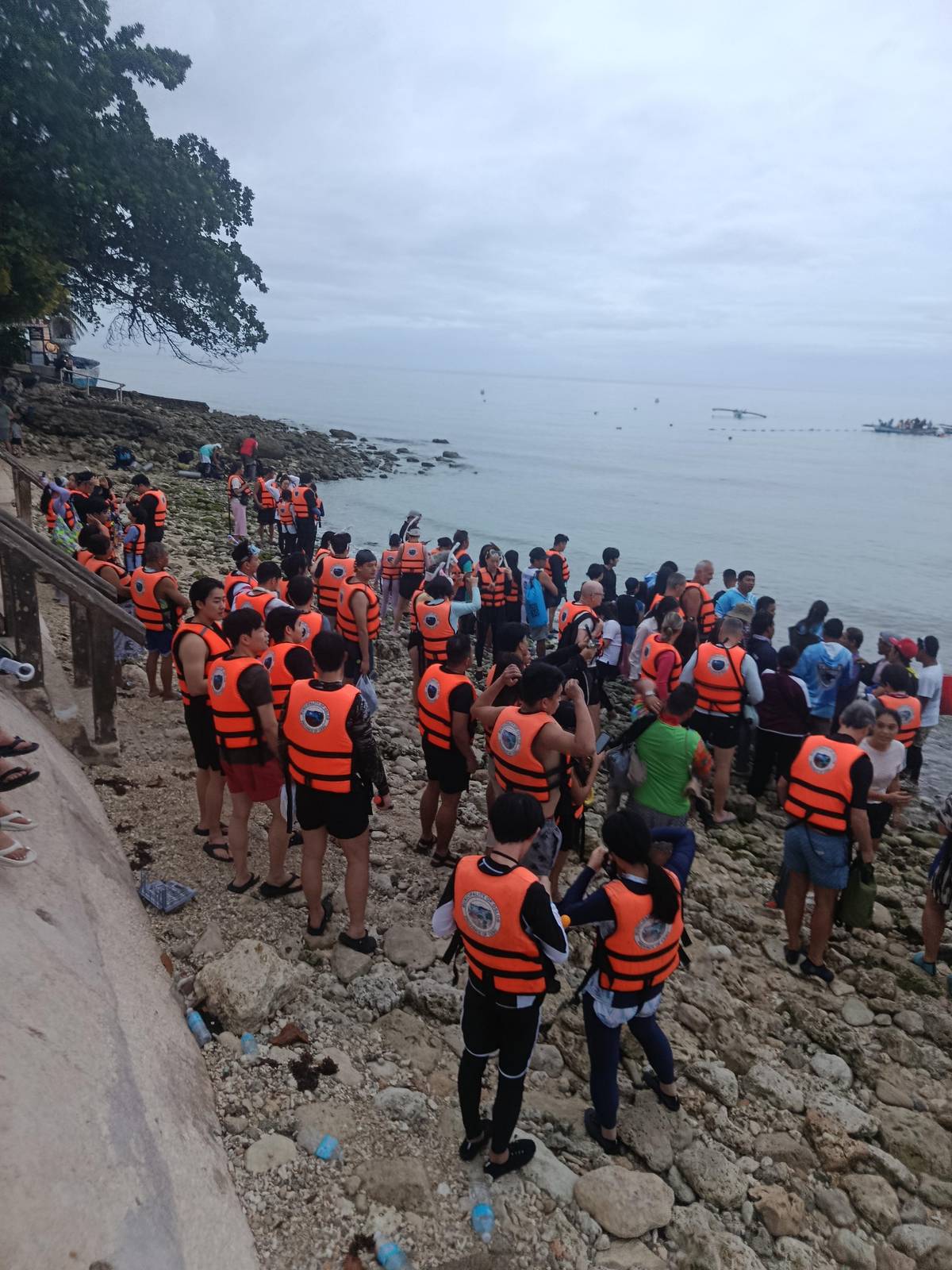
Waiting is part of the morning. In the busy months two listings expect you to queue for 2 to 3 hours on average. Guests on the booked tour describe waiting in the sun for their number; bring a hat, water and something to read.
If your dates are flexible, ask your operator which days are quietest, and take the earliest pickup available on your tour. The few minutes you gain in the queue are minutes you spend in the water instead of on the beach.
The visitors center at Tan-awan serves as the waiting area for tourists.12 In 2026 the province opened new comfort rooms with showers for swimmers at the briefing center, which makes the wait easier than it used to be.13
Dressing for the heat and the water
Plan for heat rather than cold. Average daytime highs in the Tagbilaran record stay at 30.8 °C or above in every month, and even the coolest nights average 23.2 °C.3 Light, quick-drying clothes work best, with swimwear underneath from the moment you are picked up.
In the water, a long-sleeved rash guard is the most useful piece of kit. It shields your back and shoulders as you drift with your face in the water, and it means you need little or no sunscreen, which the dive listing names as prohibited near the sharks. A thin layer also keeps you comfortable if you stay in the water for the full half hour.
Pack a light rain jacket for the wetter months and a dry bag for your phone all year. A hat and plenty of water matter more than anything else during the wait on the beach, where shade can be scarce in the middle of the morning.
If the weather turns, and other planning
Rough sea is the one thing that can change the plan at short notice. The dive listing warns that its trip depends on the weather and may be rescheduled or cancelled for safety in poor sea conditions. Snorkel trips face the same sea, and the boatmen decide on the day.
If the forecast looks bad, decide two days ahead. Cancelling is free only until 24 hours before the start, and with a pickup at 2 AM that deadline falls in the early hours of the day before; after it, the operator's terms apply. That is one more reason to schedule the whale shark day early in your stay rather than on the last morning. If you also plan to dive, leave a gap before your flight home. The scuba listing asks guests not to fly for at least 18 hours after diving.
Finally, think about what else you want from the south. Donsol was surveyed from December to June, so a trip in those months could combine Oslob with Donsol on another island.8 Our page on the other sites compares them. Two whale shark sites in one trip also gives you a spare chance if the sea closes one of them.
Pick your date
Whale sharks at dawn, a canyon by afternoon
Hotel pickup, the whale shark fee, lunch and a canyon guide; cancelling is free until a day before.


You ask,we answer.
Is there a whale shark season at Oslob?
Sharks are there all year. They are fed daily, year-round; numbers peak from May to November.12
What time is whale shark watching in Oslob?
From 6 am to 1 pm. Watchers may only enter the interaction area in those hours.4
What is the driest month?
April. 56 mm of rain and 3 rain days in the Tagbilaran record.3
What is the wettest month?
December. 175 mm of rain in the Tagbilaran record.3
How hot is it?
Hot all year. January highs average 30.8 °C, May highs 33.2 °C.3
How long is the wait?
Often 2 to 3 hours in peak season. Two listings give that average.
Sources
Evidence for this guide
- 1Scientific Reports (Araujo et al. 2019)Honda Bay, Palawan: a whale shark aggregation and its role in the conservation of the species↩
- 2Royal Society Open Science (Thomson et al. 2017)Feeding the world's largest fish: highly variable whale shark residency patterns at a provisioning site in the Philippines↩
- 3↩
- 4PeerJ (Schleimer et al. 2015)Learning from a provisioning site: code of conduct compliance and behaviour of whale sharks in Oslob, Cebu, Philippines↩
- 5Royal Society Open Science (Thomson et al. 2017)Feeding the world's largest fish: highly variable whale shark residency patterns at a provisioning site in the Philippines↩
- 6Royal Society Open Science (Thomson et al. 2017)Feeding the world's largest fish: highly variable whale shark residency patterns at a provisioning site in the Philippines↩
- 7PeerJ (Schleimer et al. 2015)Learning from a provisioning site: code of conduct compliance and behaviour of whale sharks in Oslob, Cebu, Philippines↩
- 8Frontiers in Marine Science (McCoy et al. 2018)Long-term photo-identification reveals the population dynamics and strong site fidelity of adult whale sharks to the coastal waters of Donsol, Philippines↩
- 9Royal Society Open Science (Thomson et al. 2017)Feeding the world's largest fish: highly variable whale shark residency patterns at a provisioning site in the Philippines↩
- 10↩
- 11Royal Society Open Science (Legaspi et al. 2020)In-water observations highlight the effects of provisioning on whale shark behaviour at the world's largest whale shark tourism destination↩
- 12↩
- 13↩
Keep reading