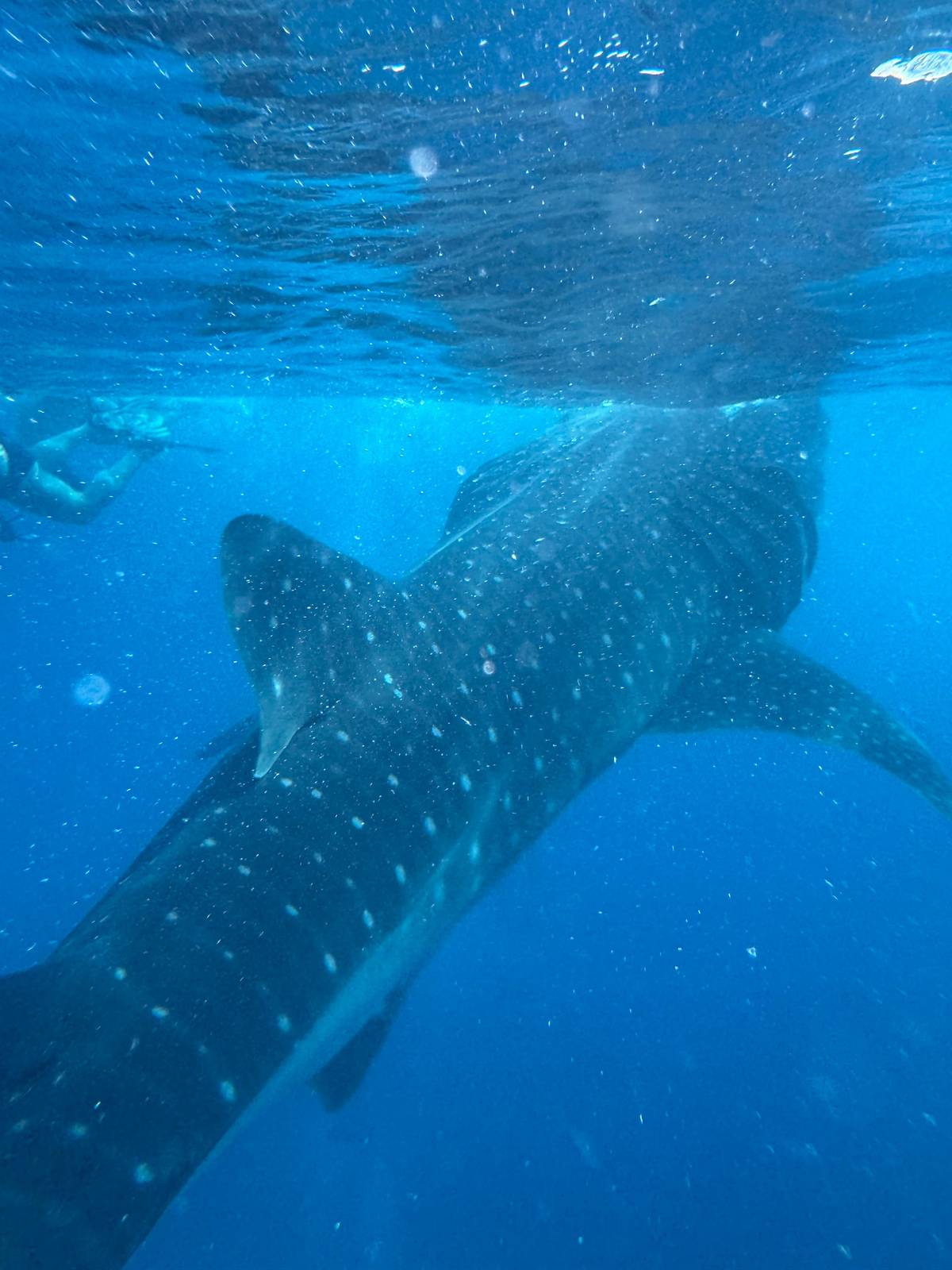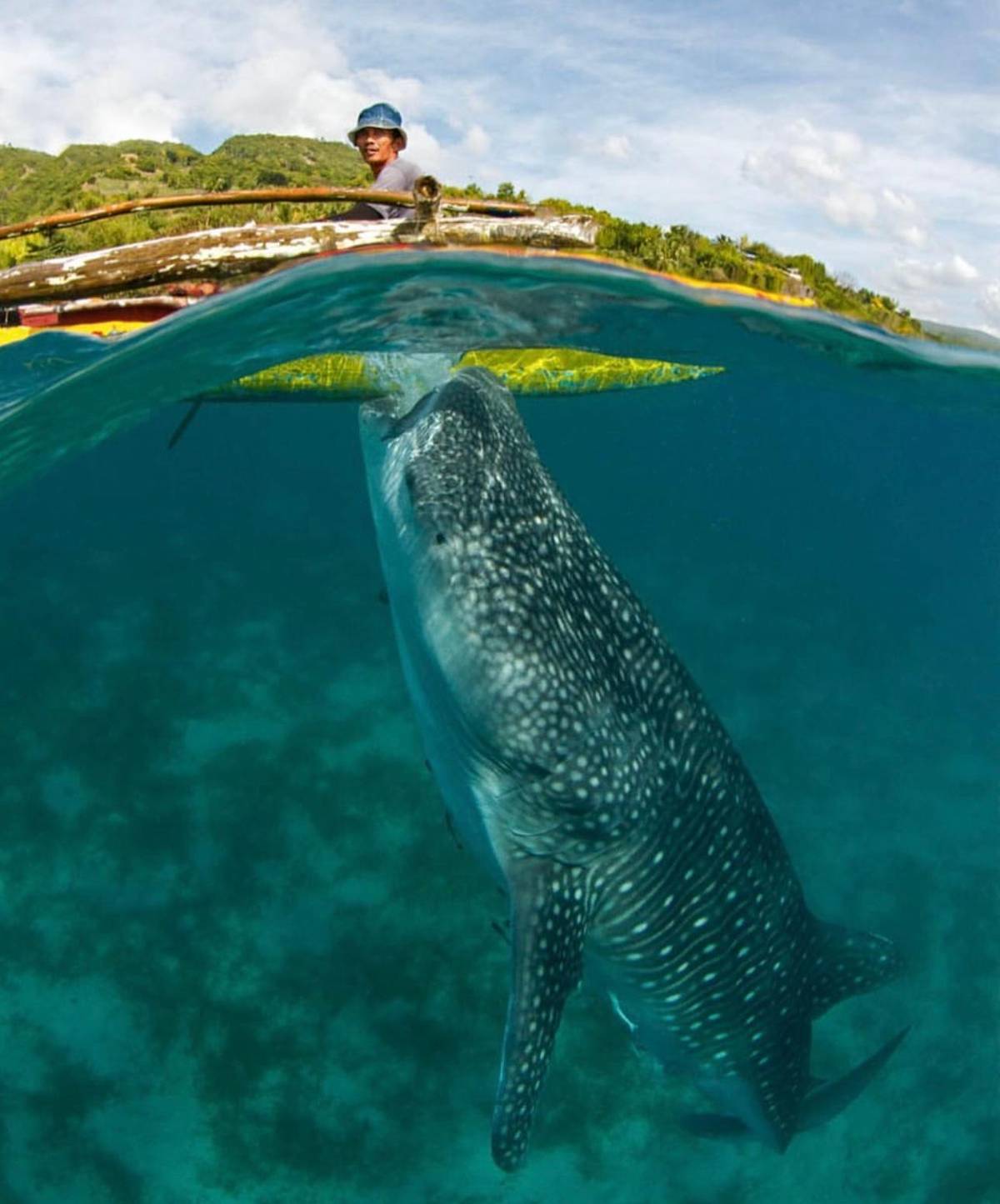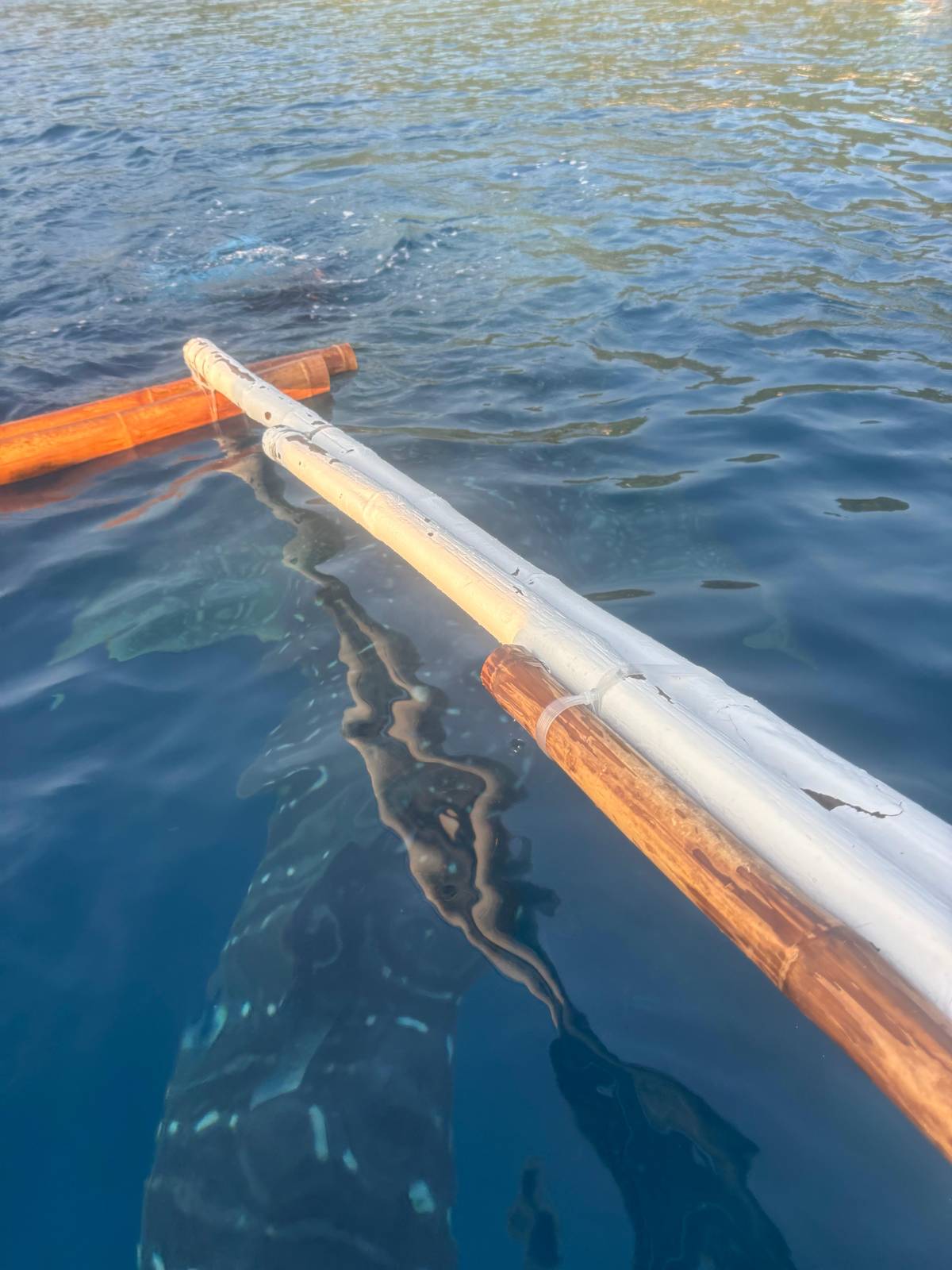
 Weak swimmers
Hold on to the boat
Calm and easy
- Gear
- Mask, life jacket
- Where
- Beside your boat
- Time
- 30 min
Guides
Language
EnglishCurrency
US dollar · $GetYourGuide uses the currency you choose.
Guide · Rules
To swim with whale sharks in Cebu you go to Tan-awan in Oslob, where a municipal ordinance sets how close you may come, how many people share one shark and how long you stay.
Editorial team, oslobwhalesharkwatching.comUpdated October 22, 2026Reading time 6 min16 sources
The rules at a glance
The whale shark watching at Tan-awan is not a free-for-all. It is governed by a municipal ordinance of the local government unit of Oslob, Ordinance No. 091 of 2012, which contains a code of conduct for anyone in the water.2 Researchers describe the code as approved on 6 January 2012 and amended on 12 April 2012.5 Every tour from Cebu delivers you into the same system, and the boatmen and guides on the beach work inside it.
Most of what follows comes from the ordinance as peer-reviewed studies of the site report it, read on 22 October 2026.1 The town can change its rules, its hours or its fees at any time, and the briefing on the day is what counts. Treat this page as preparation, not as a substitute for listening to the people who paddle you out. If something in the briefing differs from what you read here, follow the briefing: the boatmen answer for your group in front of the town, not us.
The rules matter for a simple reason that the sources spell out. The whale shark is listed as Endangered on the IUCN Red List, and the Philippines bans all fishing for the species.67 The sharks you meet at Oslob are wild animals that come to a feeding site, not trained animals in a pen.
On the beach
On arrival
The visitors center is the waiting area for tourists.8
Before boarding
Guests hear the interaction guidelines before going out.4
Out on the water
30 min
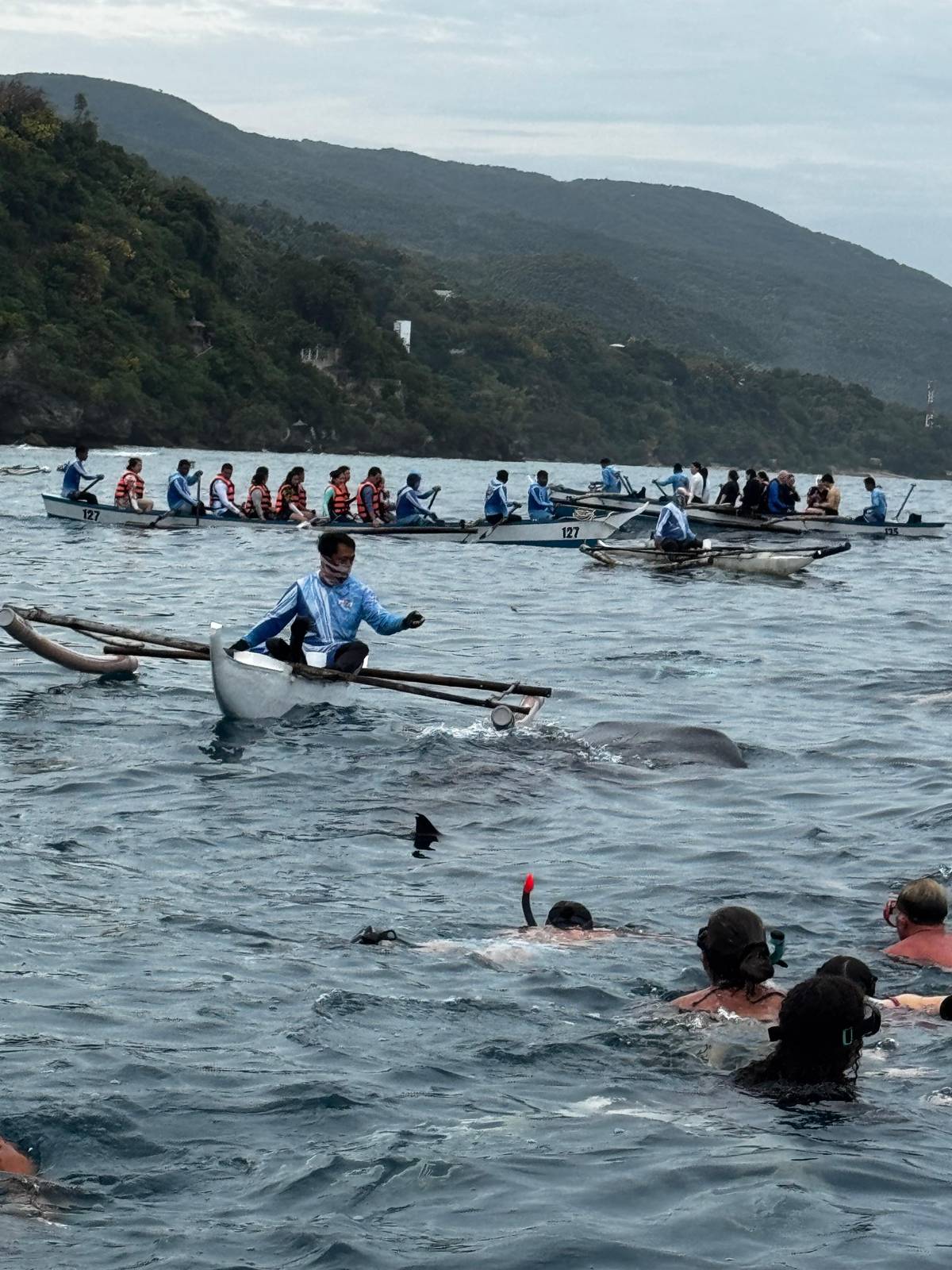
Snorkel or hold on to the boat while feeders lure the sharks.92
Afterwards
Comfort rooms with showers stand at the briefing center.10
The ordinance sets two distances. You keep at least 5 m from the side and the tail of a whale shark, and at least 2 m from its mouth.1 In practice the sharks often swim toward the line of boats because the feeders lure them along it with food, and a shark can close the gap itself.9 If that happens, back away calmly with slow fin kicks rather than lunging aside.
The tail is the part to respect most. A big shark moves a lot of water with each sweep, and the 5 m rule behind the tail fin keeps you out of that arc. The mouth rule is shorter, but swimming straight into the path of a feeding shark leaves it nowhere to go. Stay to the side, look ahead, and let the animal pass. Before you jump in, pick a reference point on your boat and keep it within sight; it is easier to judge a gap of a few body lengths when you know where you started.
Researchers found these distances hard to keep. Over surveys from 2015 to 2017, 93% recorded people less than 2 m from a shark, which the authors call poor compliance and overcrowding.11 Being one of the few swimmers who keeps the gap is the most useful thing you can do in the water.
The code of conduct
| Rule | Snorkelers and watchers | Scuba divers |
|---|---|---|
| Time with the sharks | 30 min | up to an hour |
| People per shark | six at most | four at most |
| Distance from side and tail | 5 m | 5 m |
| Distance from the mouth | 2 m | 2 m |
| Touching and riding | not allowed | not allowed |
From Ordinance No. 091 of 2012 as the Oslob studies describe it; the divers' time comes from the earlier study, the rest from both.21133
Three ways in
Weak swimmersCalm and easy
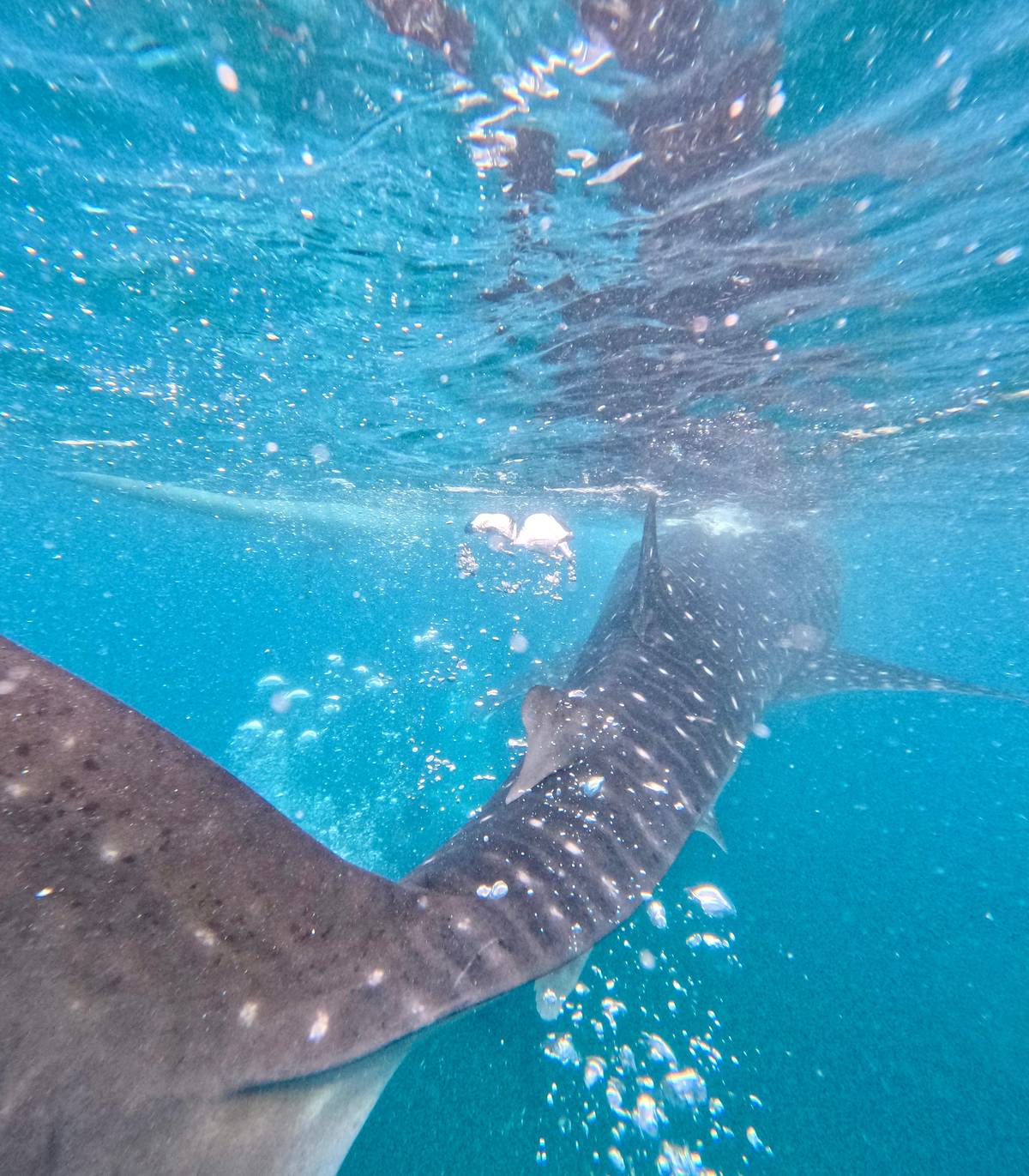 Most freedom
More room to move
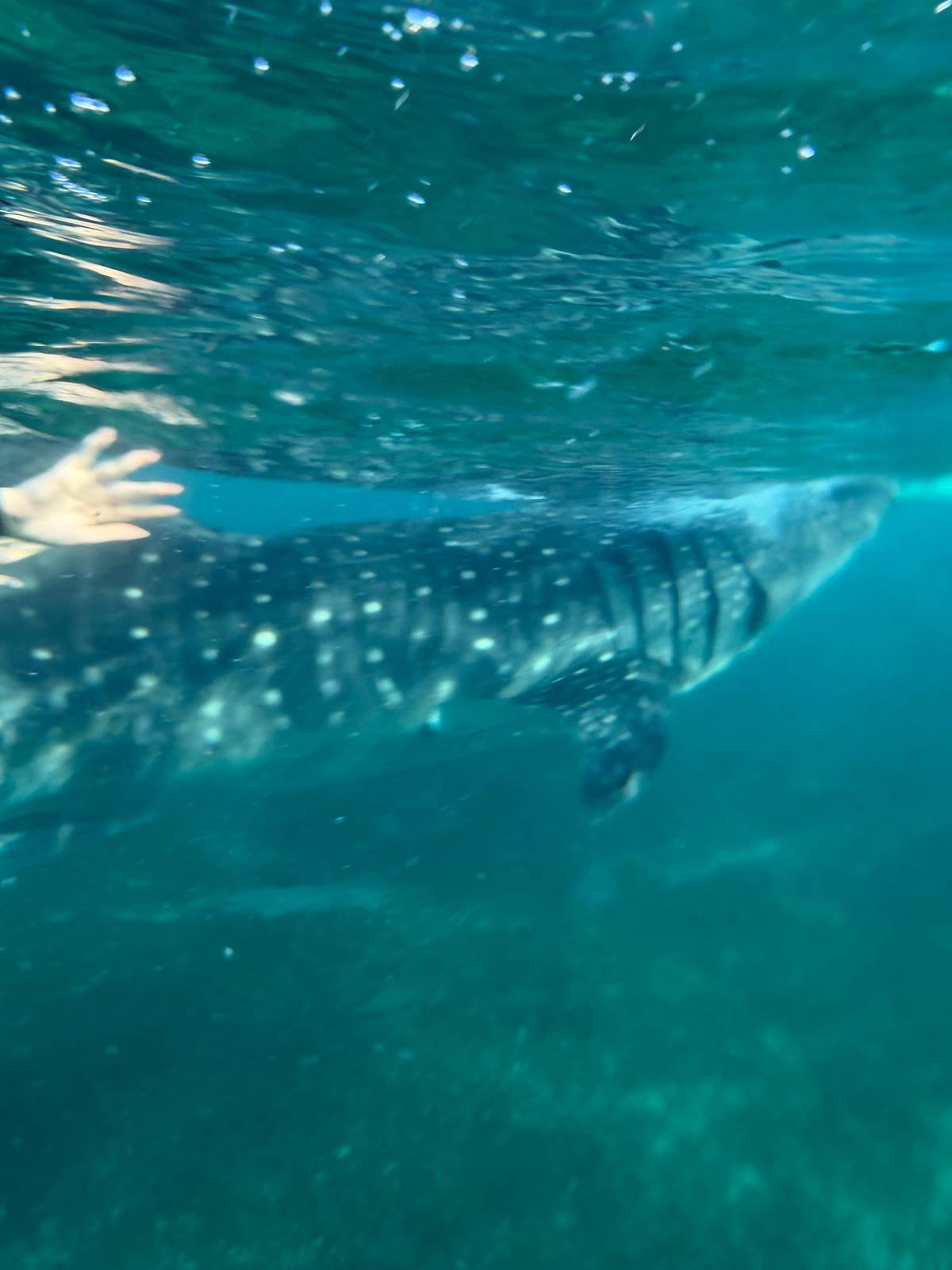 Longest stay
From a moored boat
Decision helper
Find the line that sounds like you
Furthermore, the ordinance also states that there should be no touching or riding of the whale sharks, no splashing, and only feeders are allowed to feed the whale sharks.
No. The ordinance says there must be no touching or riding of the whale sharks and no splashing, and that only the feeders may feed them.3 An earlier description of the same rules adds that touching with hands, feet, a camera or a pointer is strictly prohibited.14 A selfie stick counts as a pointer, so keep it to your side.
Tour listings repeat the message. One asks guests to never touch or feed the whale sharks. A scuba listing for the same site says touching, flash and sunscreen near the sharks are prohibited. Check your camera before you go out and switch the flash off; underwater it only lights up particles anyway.
Researchers recorded what happens when the rules slip. Sharks with a longer history at the site were less likely to avoid touches or contact with boats.15 A calm reaction is not consent: the code exists for the sharks, and the guides will tell you off for reaching out, as they should. Keep your hands folded or on the boat, and if a shark brushes past you by accident, stay still and let it move on rather than pushing it away.
Checklist
Video
Nothing loads from YouTube until you press play.
Guests get a briefing on the interaction guidelines first, then go out in paddleboats of about 5 m carrying up to 12 people for 30 minutes of watching.4 The briefing happens at the Tan-awan Whale Shark Watching Briefing Center, where the province opened new comfort rooms with showers for swimmers in 2026.10 The visitors center also serves as the waiting area for tourists.8
Out at the feeding area the tourist boats are tied in a line. You can then enter the water and either hold on to the boat or snorkel freely.9 Holding on suits weak swimmers and anyone nervous about deep water; snorkeling gives you more freedom to keep the required distance. Mask and life jacket come with the booked tour, while fins are not included.
Scuba divers follow a different routine. They are dropped from motor boats moored outside the interaction area and may stay up to an hour.13 The ordinance allows four divers per shark at a time.1 Our diving page covers that option in detail.
Sunscreen is the rule visitors forget most easily. The scuba listing names sunscreen near the sharks as prohibited, and another listing asks guests to bring reef-safe sunscreen. The simplest answer is a long-sleeved rash guard and a hat for the boat ride, with any cream applied well before you reach the water, or skipped entirely.
For photos, a small action camera on a wrist strap is easier to control than a phone in a pouch. Keep your arms close to your body when a shark comes near, and resist the urge to swim after it for a better angle. Several guests on the booked tour mention that boatmen and guides take photos for them, which leaves your own hands free. If you do film yourself, set the camera to record before you enter the water, then forget about the buttons and watch the animal.
Leave jewellery and anything loose on shore. A dropped earring sinks fast in open water, and a dangling strap can catch on the outrigger of the boat. Bring a towel and a change of clothes for afterwards; the booked tour lists both among the things to bring.
The rules set a ceiling of six watchers per shark.1 In practice the limit is often exceeded: earlier observations found it broken in 56.1% of surveys, with up to 33 snorkelers and boat-holders within 10 m of one shark.12 On a busy morning you will not always be able to keep your distance perfectly, and that is not your fault.
What you control is your own behaviour. Stay at the outer edge of the group, let the shark come past rather than chasing it, and stop kicking when it turns your way. If a shark is surrounded, look for another one along the line; the feeders keep several near the boats at once.
The authors of the later study call for better management to raise compliance, given how much the local community relies on the industry.16 As a visitor you can support that by following the briefing to the letter and by choosing a guide who does the same.
Pick your date
Hotel pickup, the whale shark fee, lunch and a canyon guide; cancelling is free until a day before.
No. The ordinance bans touching, riding and splashing; only the feeders may feed the sharks.3
Not closer than 5 m from the side or tail. Keep at least 2 m from the mouth as well.1
Thirty minutes. The code of conduct limits swimmers and watchers to 30 minutes.2
Better not near the sharks. One listing names sunscreen near the sharks as prohibited; another asks for a reef-safe one.
No. You may hold on to the boat instead of snorkeling, wearing the life jacket the tour includes.9
From 6 am to 1 pm. Watchers are only allowed in the interaction area in those hours.4
Not on the booked tour. Its listing includes mask and life jacket, but fins are not included.
Sources
Keep reading