Guides
Language
EnglishCurrency
US dollar · $GetYourGuide uses the currency you choose.
Guide · Research
Is swimming with whale sharks ethical at Oslob?
Is swimming with whale sharks ethical when the sharks come because they are fed? Researchers have studied the Oslob feeding for years. Here is what they found, both the risks and the benefits.
Editorial team, oslobwhalesharkwatching.comUpdated October 22, 2026Reading time 6 min29 sources
What the research says
Why the whale sharks come to Tan-awan
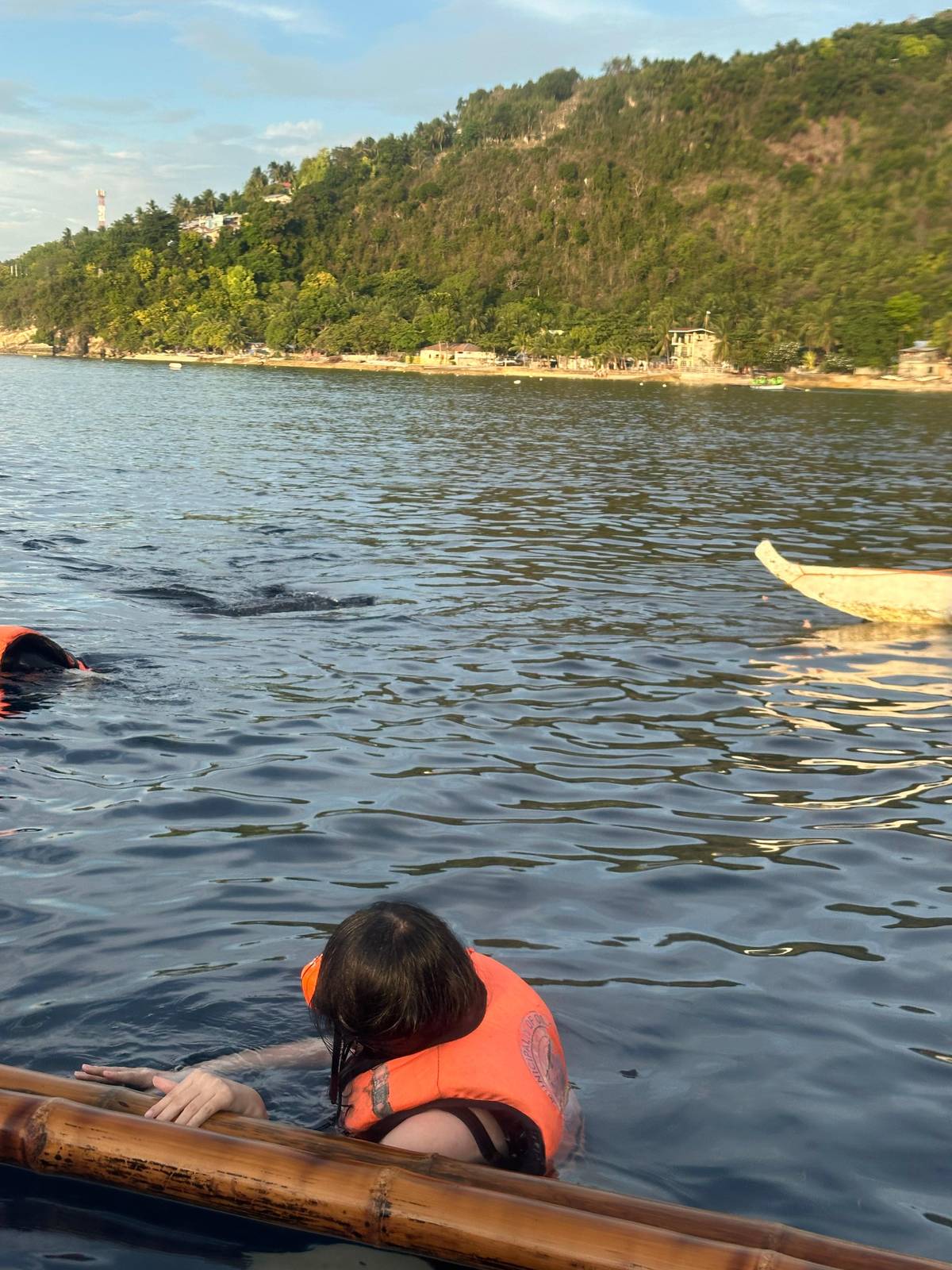
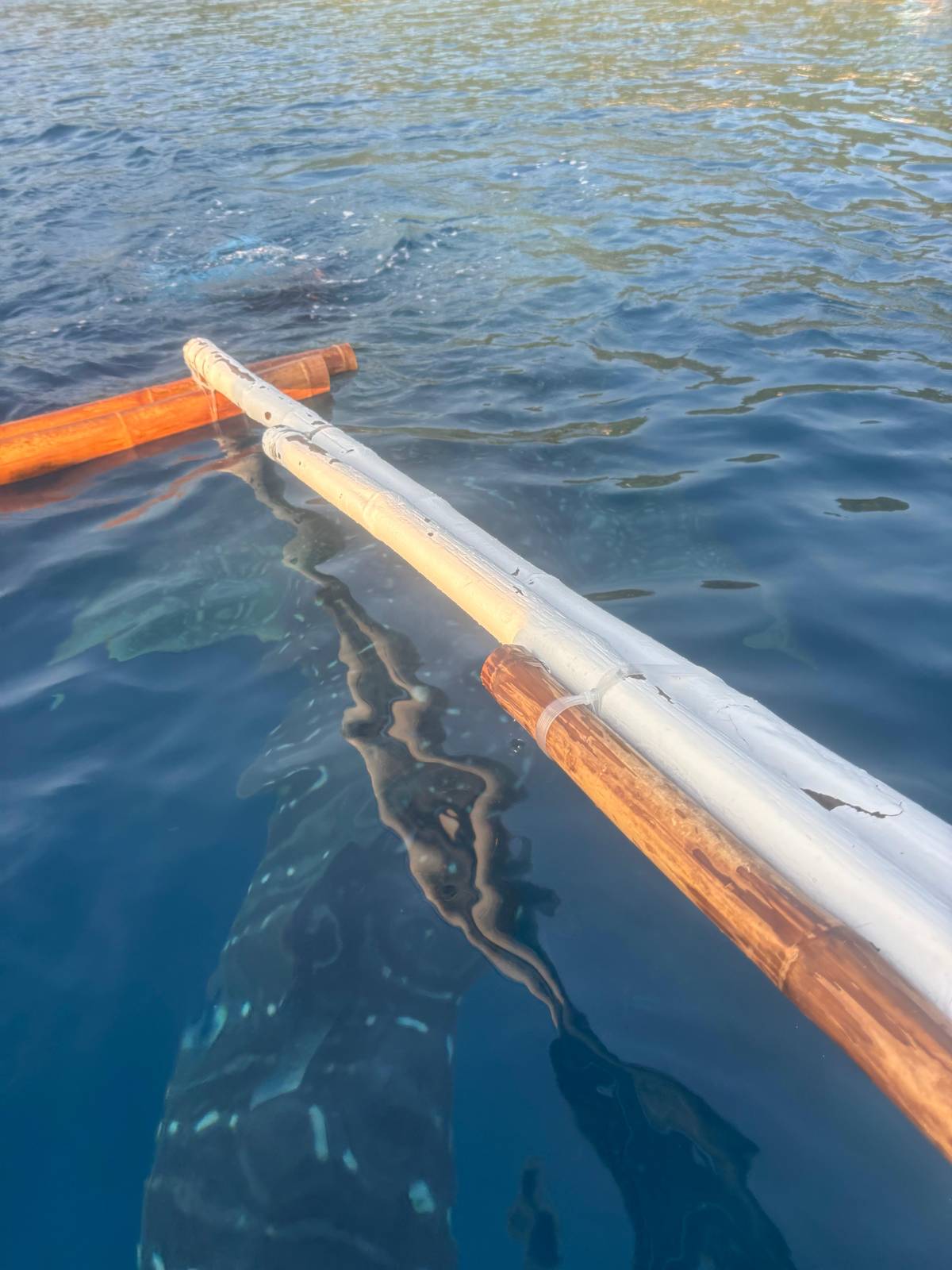
The whale sharks at Oslob are fed. In a marked area 50 to 100 m off the village of Tan-awan, feeders in one-man paddleboats hand them krill from 06.00 to 13.00 every day.1 A second study describes the food as mainly sergestid shrimp, known locally as uyap, given at up to 150 kg a day depending on shark and tourist numbers.2 Only members of the local fishermen's association, TOWSFA, are allowed to do the feeding.2
This is what makes Oslob different. Nearly all whale shark tourism elsewhere relies on chance sightings of animals that are not fed.8 One of the tour listings on GetYourGuide says it plainly: the whale sharks are fed. A Palawan listing, by contrast, notes that its sightings are not guaranteed because the sharks there are in their natural habitat and are not fed.
Before the feeding began, whale sharks were sighted only sporadically off Oslob; predictable daily sightings of large numbers have only occurred since provisioning started in 2011.3 Every honest answer to whether swimming with whale sharks is ethical starts from that fact, and the studies below look at what it has changed. They come from researchers who spent years in the water at Tan-awan identifying individual sharks from photographs.
How Oslob got here
From hunting ground to feeding site
-
Until the late 1990s
Hunting in the Bohol Sea
Then the species was protected nationally.9
-
Afterwards
Tourism begins
Donsol in Sorsogon led the way.10
-
2011
Feeding starts at Oslob
Daily sightings follow.3
-
2012
Ordinance adopted
A code of conduct for the water.11
-
2015
182,000 visitors
From the municipal tourist logbook.12
-
2018
Over 500,000 visitors
Ticket sales estimated in the millions.13
What is the whale shark's diet in the wild?
In the open sea a whale shark is a filter feeder. It gulps water and filters out plankton, fish eggs, crustaceans and schooling fish, and occasionally larger prey such as squid or tuna.14 Its 20 filter pads let it sift an average of 20,723 grams of plankton a day.15 A juvenile is estimated to eat 21 kg of plankton a day.16
That food is patchy and moves with the seasons, and whale sharks move with it. They are highly migratory, with daily movements of about 24 to 28 km, even though they also return to favourite feeding sites.17 Two whale sharks identified in Honda Bay in Palawan were matched to Oslob, about 500 km away.18
At Tan-awan the food is delivered by hand, daily and all year, in a small patch of sea.191 That contrast with the scattered food of the open sea is at the centre of the debate.
Behaviour at the feeding site
How the sharks spent their time, in percent
Three studies
What researchers found at Oslob
| Study period | Focus | Main finding |
|---|---|---|
| 2012 to 2015 | Who visits and stays | 208 sharks; nine year-round residents |
| 2012 to 2014 | Learning and code of conduct | Sharks learn the site; limits often exceeded |
| 2015 to 2017 | Behaviour in the water | People within 2 m in 93% of surveys |
The three studies of the Oslob feeding site cited on this page, by their survey periods.21642223
Your call
Oslob or a site without feeding?
Match the choice to what matters most to you
Since prolonged residency equates to less time foraging naturally, provisioning could influence foraging success, alter distributions and lead to dependency in later life stages.
The sharks learn where the food is
One study followed individual sharks over time. Newly identified sharks gradually arrived earlier at the feeding site, which shows they learn to link the place with food; sharks with a long history there arrived on average 5 minutes after the feeder boats.4 Whale sharks are known to learn elsewhere too, circling the feeding point in captivity when keepers appear with food.25
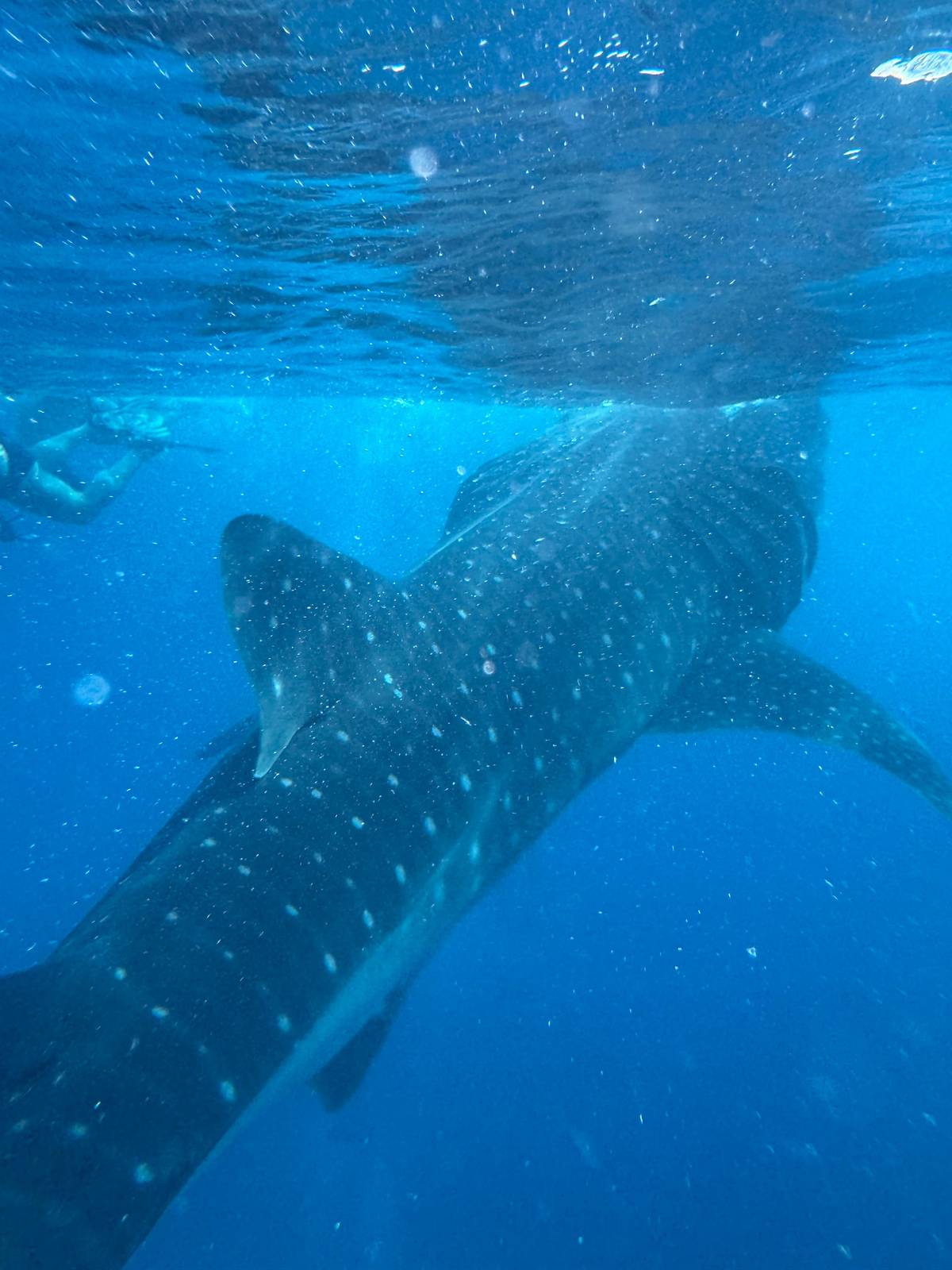
Feeding changed how they behave around people. Sharks with a longer sighting history were less likely to avoid touches or contact with boats, and experienced sharks were more likely to feed upright.5 In 357 hours of observation of 59 sharks, vertical feeding took up 58.2% of the time, horizontal feeding 21.8% and free swimming 20.2%, while natural feeding made up 0.02%.20
A study from 2015 to 2017 confirmed the pattern.23 The number of previous visits strongly predicted a shark's behaviour, and provisioned sharks were less likely to show avoidance.23 Calm sharks make a better photograph, but the earlier study reads that calm as habituation, a tolerance of people learned over repeated visits.
Checklist
Going with a light footprint
In the water
- Keep the full distance from side, tail and mouth
- Never touch or ride a shark
- No splashing, no chasing
Before and after
- Skip sunscreen, wear a rash guard
- Choose a guide who follows the briefing
- Leave the water when your time ends
Video
Shark Scientist Reacts to Inside Asia's Most Hated Tourism Attraction
Nothing loads from YouTube until you press play.
Who stays and for how long
A three-year photo-identification study counted 208 individual whale sharks at Oslob, on average 18.6 a week, with a range from 6 to 43.21 Their patterns varied widely, from a single visit to sporadic visits, seasonal residency and year-round residency.6 Nine became year-round residents, which the authors call a clear response to provisioning.6
The authors spell out what that could mean. Long residency means less time foraging naturally, so provisioning could influence foraging success, alter where the sharks go and lead to dependency later in life.7 They add, in the same sentence, that these impacts must be weighed against the benefits of provisioning, tourism income in a remote community, to reach informed management decisions.7
Not every shark stays. The patterns run from a single visit to year-round residency, and sharks identified at Oslob have turned up hundreds of kilometres away.618 The research describes a mix of residents and passers-by, not a captive group. That matters when you read claims that the Oslob sharks never leave: some do stay, many come and go, and the studies cannot say where the visitors spend the rest of the year.
The people side: livelihoods and crowds
Whale shark watching gives the fisherfolk of Oslob an alternative source of livelihood.24 The Province of Cebu describes the Tan-awan site as drawing thousands of local and foreign tourists each year and providing livelihood for residents.26 A later study reports over 500,000 tourists in 2018, with ticket sales its authors estimate in the millions.13
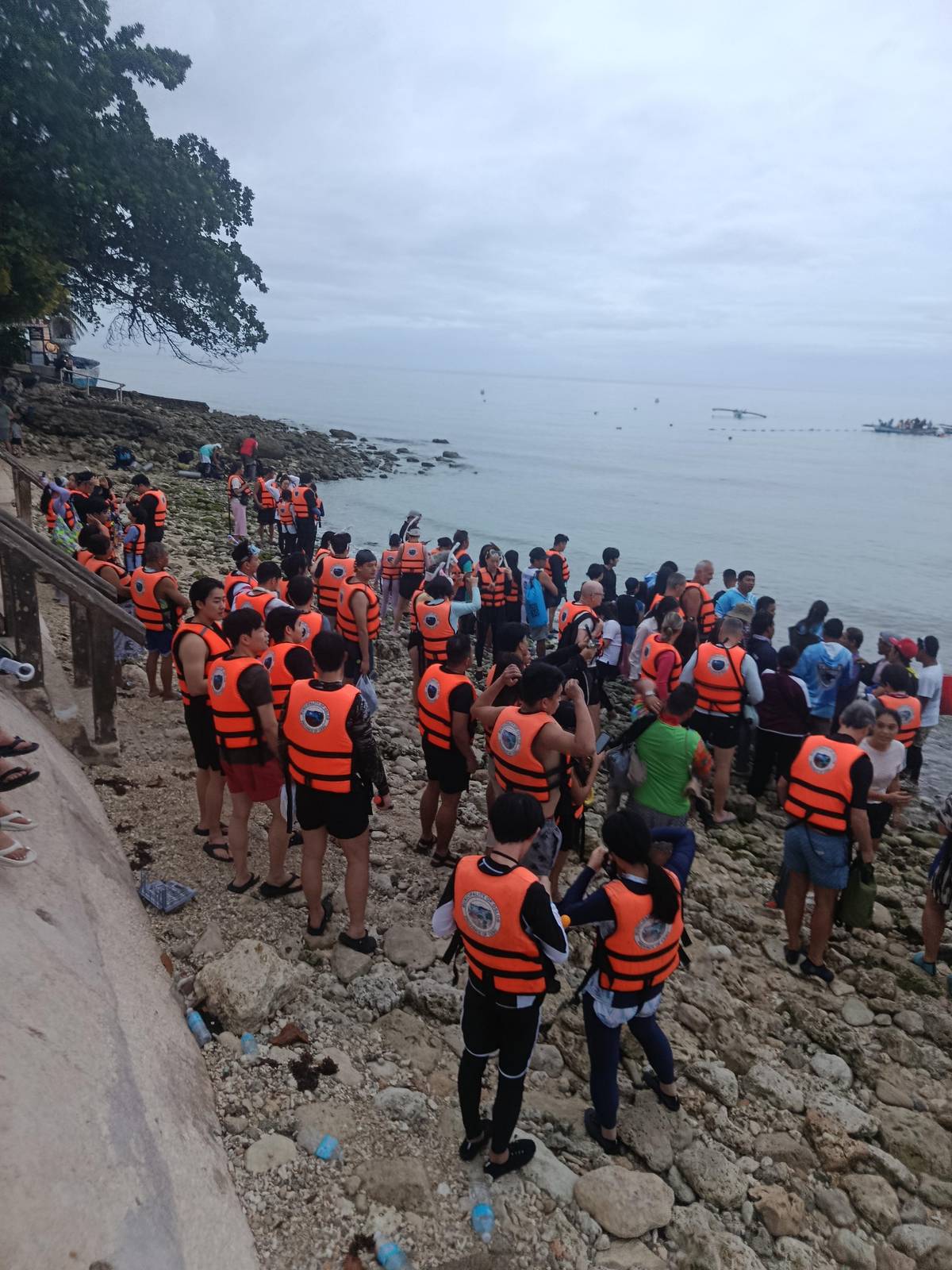
Those numbers are why crowding is the other issue researchers raise. In the surveys from 2015 to 2017, 93% recorded people less than 2 m from a shark, which the authors call poor compliance and overcrowding.23 They call for better management to raise compliance and for sustainable practices, given how much the community relies on the industry.27
What these studies call for is management: impacts weighed against benefits, and better compliance with the rules in the water.727 Whether you go is your decision; how you behave in the water once you are there is the part the research can help with. Booking with an operator whose guides enforce the briefing, and arriving early before the beach fills, are two small choices that line up with what the studies ask for.
If you decide to go
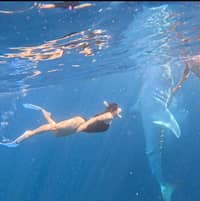
Follow the code of conduct exactly. Keep at least 5 m from the side and tail and 2 m from the mouth, and do not touch, ride or splash.2829 Only the feeders may feed the sharks.29 The sharks will often let you closer than that; the rule is yours to keep, not theirs.
Stay at the edge of the group, let a shark pass rather than following it, and leave the water when your time is up. A calm morning at the outer end of the boat line usually gives a better view than the crowded middle, and it adds less pressure on the animal.
If you would rather see whale sharks that are not fed, look at the seasonal sites elsewhere in the Philippines, such as Donsol or Honda Bay, covered on our page about other whale shark places. They require more luck, since the sharks there come and go on their own schedule. A trip there is a gamble with the weather and the season, and some boats come back with nothing to show; for many travellers that uncertainty is exactly the point.
Pick your date
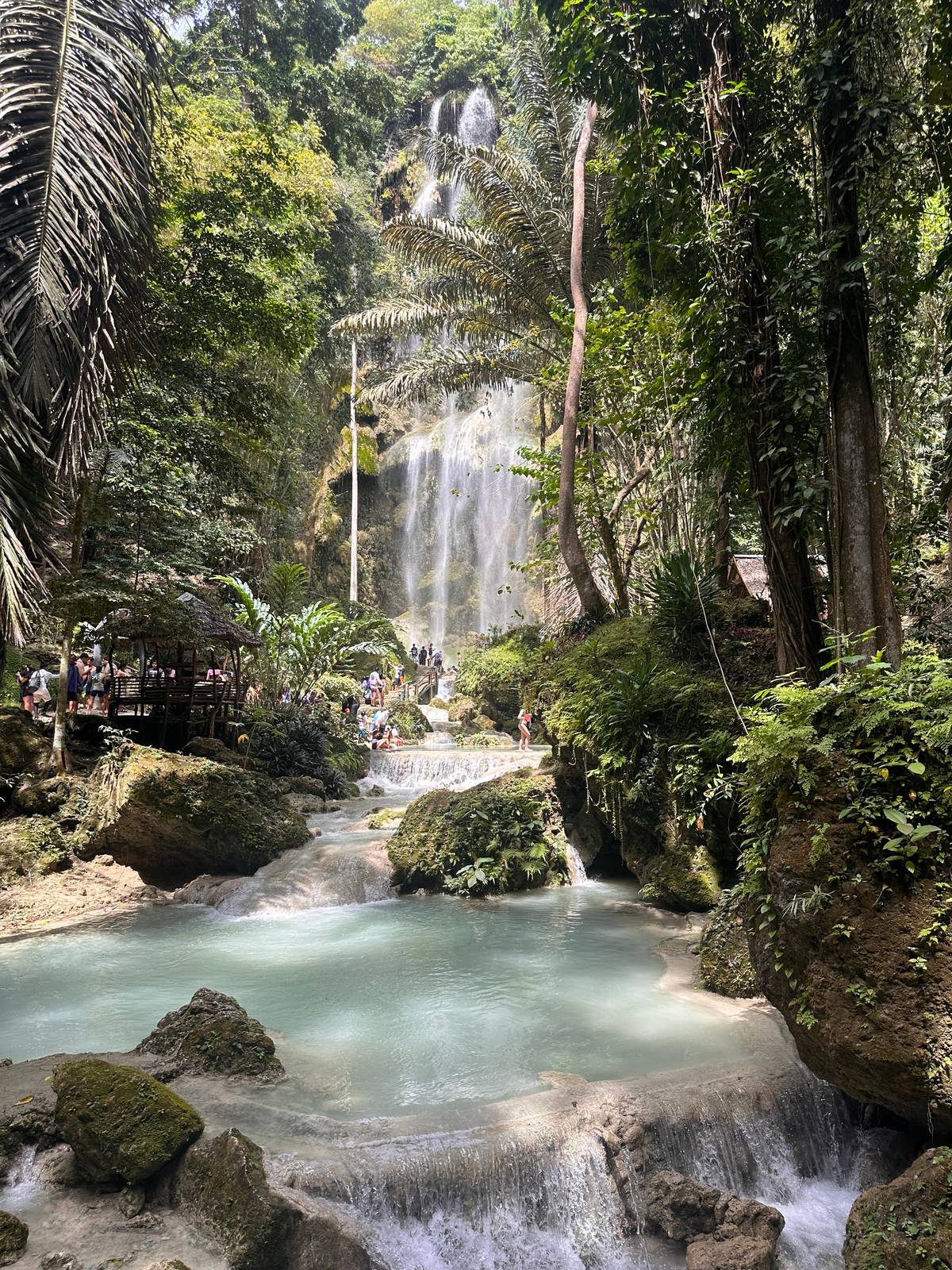
Whale sharks at dawn, a canyon by afternoon
Hotel pickup, the whale shark fee, lunch and a canyon guide; cancelling is free until a day before.


You ask,we answer.
Are the Oslob whale sharks fed?
Yes, by hand. Feeders give them krill from 06.00 to 13.00 every day.1
What are they fed?
Mainly small shrimp. Sergestid shrimp, locally uyap, up to 150 kg a day.2
Has the feeding changed their behaviour?
Yes, according to two studies. Regular visitors avoid touches and boats less and feed upright more often.523
Who benefits from the tourism?
The local community. It gives the town's fisherfolk an alternative livelihood.24
Where can I see whale sharks that are not fed?
At seasonal sites elsewhere. A Palawan listing states its whale sharks are not fed.
Sources
Evidence for this guide
- 1Royal Society Open Science (Thomson et al. 2017)Feeding the world's largest fish: highly variable whale shark residency patterns at a provisioning site in the Philippines↩
- 2PeerJ (Schleimer et al. 2015)Learning from a provisioning site: code of conduct compliance and behaviour of whale sharks in Oslob, Cebu, Philippines↩
- 3Royal Society Open Science (Thomson et al. 2017)Feeding the world's largest fish: highly variable whale shark residency patterns at a provisioning site in the Philippines↩
- 4PeerJ (Schleimer et al. 2015)Learning from a provisioning site: code of conduct compliance and behaviour of whale sharks in Oslob, Cebu, Philippines↩
- 5PeerJ (Schleimer et al. 2015)Learning from a provisioning site: code of conduct compliance and behaviour of whale sharks in Oslob, Cebu, Philippines↩
- 6Royal Society Open Science (Thomson et al. 2017)Feeding the world's largest fish: highly variable whale shark residency patterns at a provisioning site in the Philippines↩
- 7Royal Society Open Science (Thomson et al. 2017)Feeding the world's largest fish: highly variable whale shark residency patterns at a provisioning site in the Philippines↩
- 8Royal Society Open Science (Thomson et al. 2017)Feeding the world's largest fish: highly variable whale shark residency patterns at a provisioning site in the Philippines↩
- 9Scientific Reports (Araujo et al. 2019)Honda Bay, Palawan: a whale shark aggregation and its role in the conservation of the species↩
- 10Scientific Reports (Araujo et al. 2019)Honda Bay, Palawan: a whale shark aggregation and its role in the conservation of the species↩
- 11PeerJ (Schleimer et al. 2015)Learning from a provisioning site: code of conduct compliance and behaviour of whale sharks in Oslob, Cebu, Philippines↩
- 12Royal Society Open Science (Thomson et al. 2017)Feeding the world's largest fish: highly variable whale shark residency patterns at a provisioning site in the Philippines↩
- 13Royal Society Open Science (Legaspi et al. 2020)In-water observations highlight the effects of provisioning on whale shark behaviour at the world's largest whale shark tourism destination↩
- 14Florida Museum of Natural HistoryRhincodon typus (whale shark), species profile↩
- 15Florida Museum of Natural HistoryRhincodon typus (whale shark), species profile↩
- 16WikipediaWhale shark↩
- 17Florida Museum of Natural HistoryRhincodon typus (whale shark), species profile↩
- 18Scientific Reports (Araujo et al. 2019)Honda Bay, Palawan: a whale shark aggregation and its role in the conservation of the species↩
- 19Scientific Reports (Araujo et al. 2019)Honda Bay, Palawan: a whale shark aggregation and its role in the conservation of the species↩
- 20PeerJ (Schleimer et al. 2015)Learning from a provisioning site: code of conduct compliance and behaviour of whale sharks in Oslob, Cebu, Philippines↩
- 21Royal Society Open Science (Thomson et al. 2017)Feeding the world's largest fish: highly variable whale shark residency patterns at a provisioning site in the Philippines↩
- 22PeerJ (Schleimer et al. 2015)Learning from a provisioning site: code of conduct compliance and behaviour of whale sharks in Oslob, Cebu, Philippines↩
- 23Royal Society Open Science (Legaspi et al. 2020)In-water observations highlight the effects of provisioning on whale shark behaviour at the world's largest whale shark tourism destination↩
- 24WikipediaOslob↩
- 25Animal Diversity Web, University of MichiganRhincodon typus: whale shark↩
- 26↩
- 27Royal Society Open Science (Legaspi et al. 2020)In-water observations highlight the effects of provisioning on whale shark behaviour at the world's largest whale shark tourism destination↩
- 28Royal Society Open Science (Legaspi et al. 2020)In-water observations highlight the effects of provisioning on whale shark behaviour at the world's largest whale shark tourism destination↩
- 29Royal Society Open Science (Legaspi et al. 2020)In-water observations highlight the effects of provisioning on whale shark behaviour at the world's largest whale shark tourism destination↩
Keep reading